
Altar Paraments
Altar Paraments
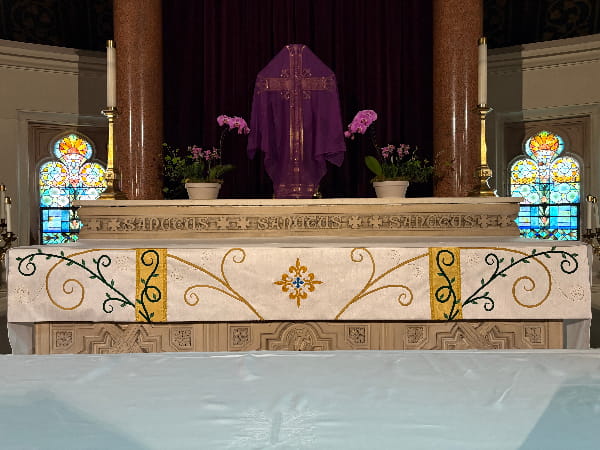
Custom-designed altar paraments created to reflect the liturgical life, symbolism, and architecture of your space.
What Are Altar Paraments?
Paraments are the textile elements within a church that change with the liturgical seasons. They help mark time, rhythm, and meaning within the life of a congregation.
Pieces may include:
- altar frontals
- pulpit falls
- overlays
- banners
- and more
The Role of Color
In many liturgical traditions, color plays a central role.
- White - Easter Sunday, Eastertide, Trinity Sunday, Christ the King Sunday, All Saints, Christmas, Christmastide, Feast of the Epiphany, Baptism of Our Lord, Weddings, Funerals, Baptisms
- Green - Epiphanytide, Season of Pentecost
- Purple - Ash Wednesday, Lent
- Blue - Advent
- Rose - 3rd Sunday of Advent (Gaudete Sunday) and 4th Sunday of Lent (Tefreshment Sunday)
- Red - Pentecost Sunday, Palm Sunday, Feasts of Martyrs, Confirmations, Ordinations
Each set of handmade church paraments is created with this rhythm in mind, designed not only for beauty, but for meaning and continuity.
Designed for the Space They Serve
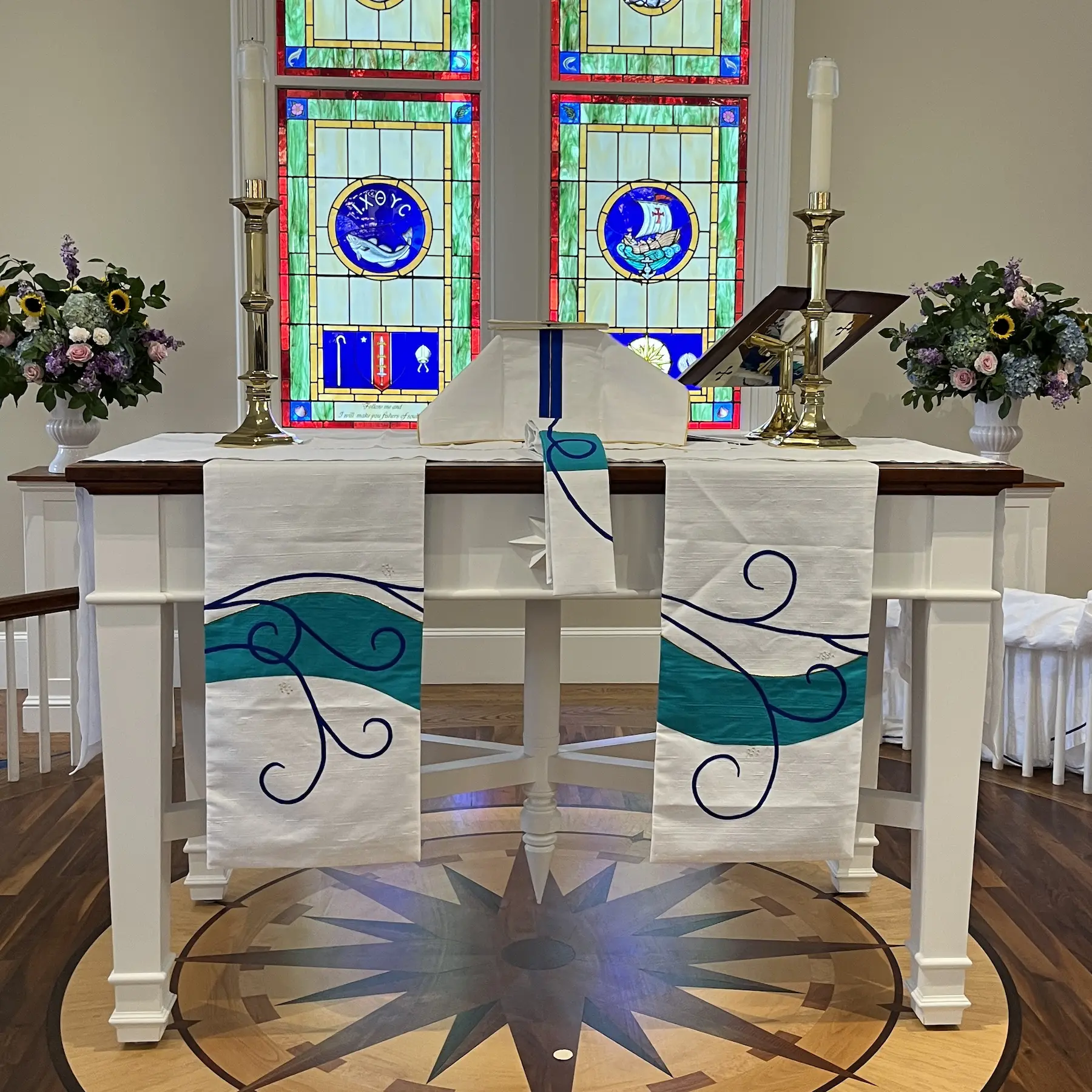
Each set of handmade liturgical paraments is bespoke, created as a one-of-a-kind response to a specific place.
A sense of the movement of the Holy Spirit runs through the work, connecting each piece across the sanctuary. Color harmony is carefully considered so that the textiles feel integrated with the surrounding space rather than separate from it.
I strive to strike a balance between expression and detail, while still offering space in the design for the eye to rest.
The result is not only decorative, but deeply connected to the rhythm and meaning of worship.
Learn more about the design and collaboration process.
Materials and Craftsmanship for Paraments
I create each piece using carefully selected materials chosen for both beauty and longevity.
These methods come together to create altar cloths and handmade liturgical paraments that are both visually striking and enduring.
This process reflects the same approach used in custom vestments and other liturgical textiles.
Materials
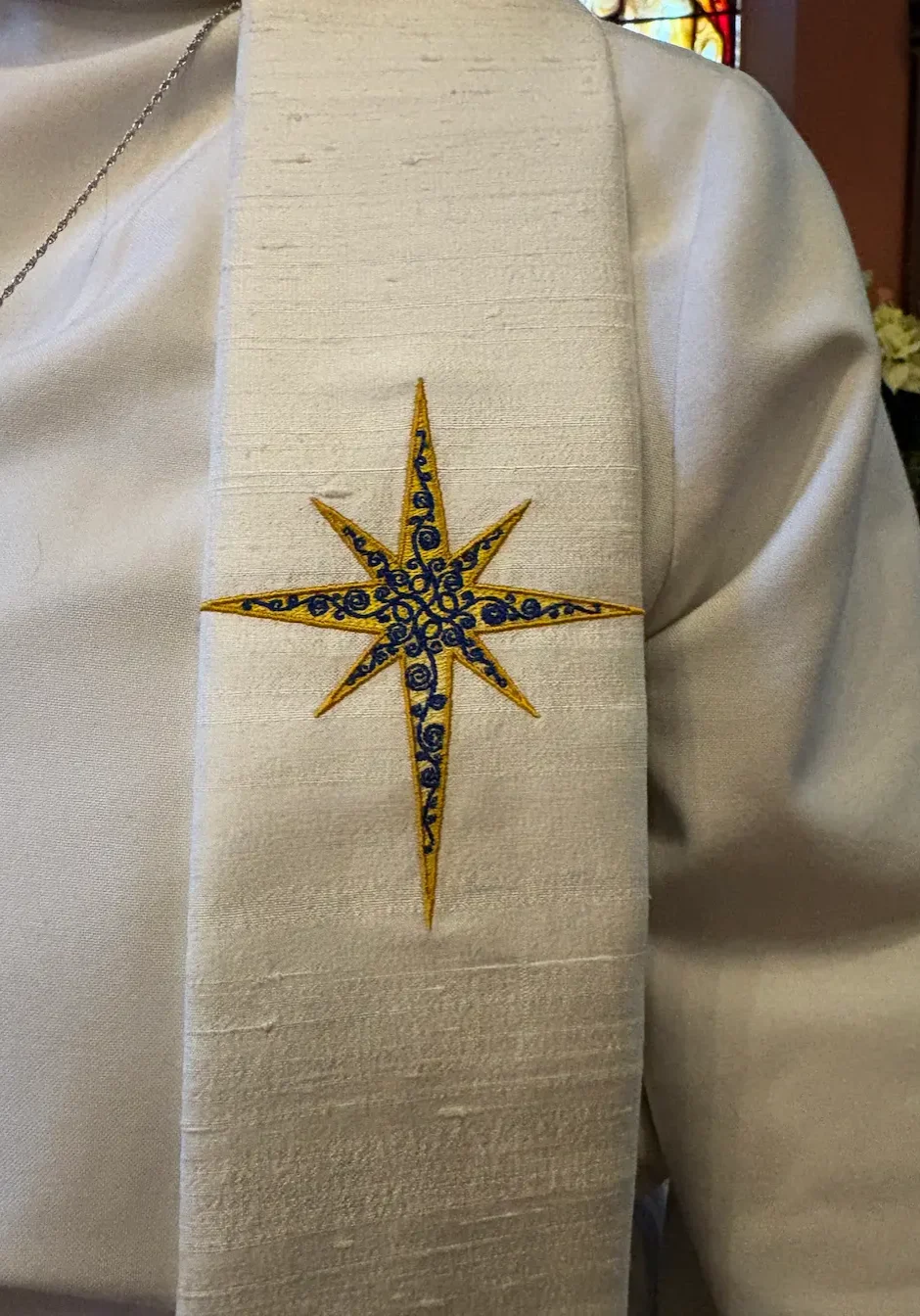
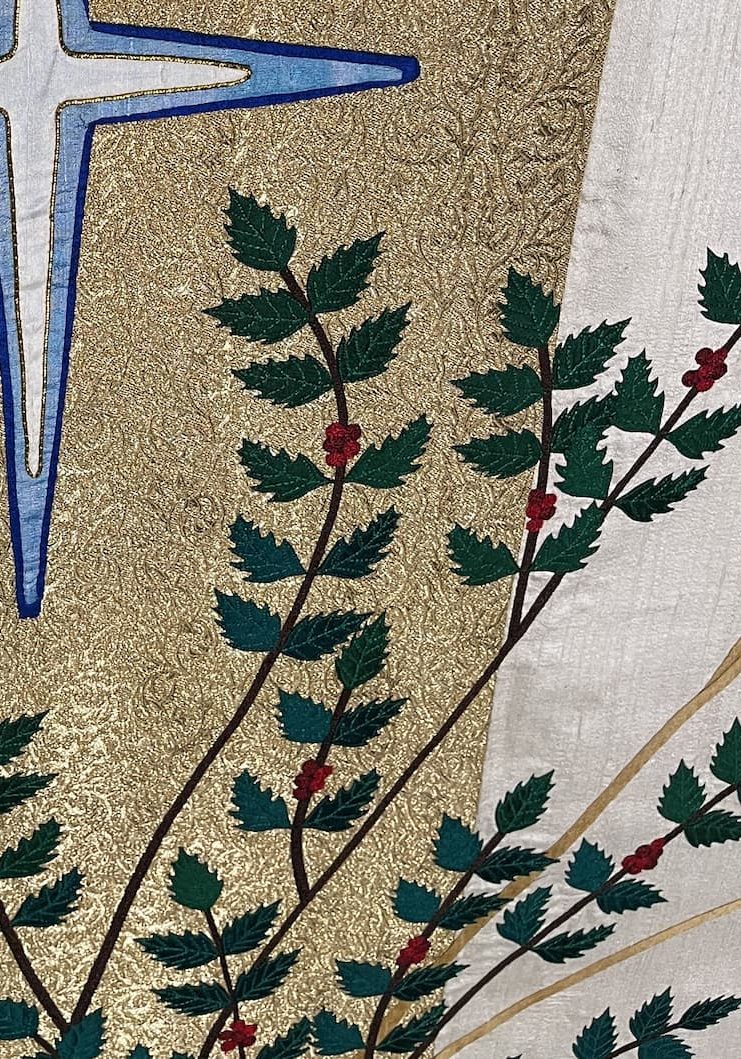
Dupioni silk forms the foundation of much of the work, sometimes paired with liturgical brocades and galloons.
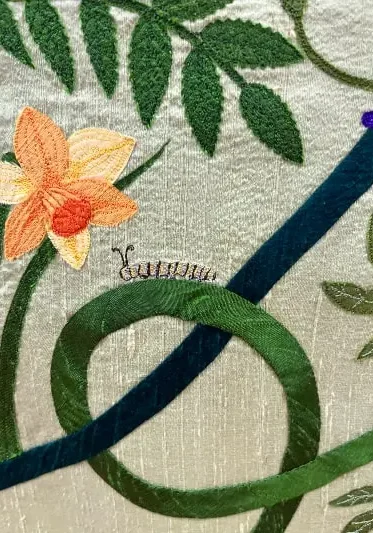
I often include what I call “micro-elements” in my pieces. These are the addition of tiny insects: ladybugs, caterpillars, butterflies, dragonflies, etc. This gives children something to look for while kneeling at the altar rail for communion.
Techniques
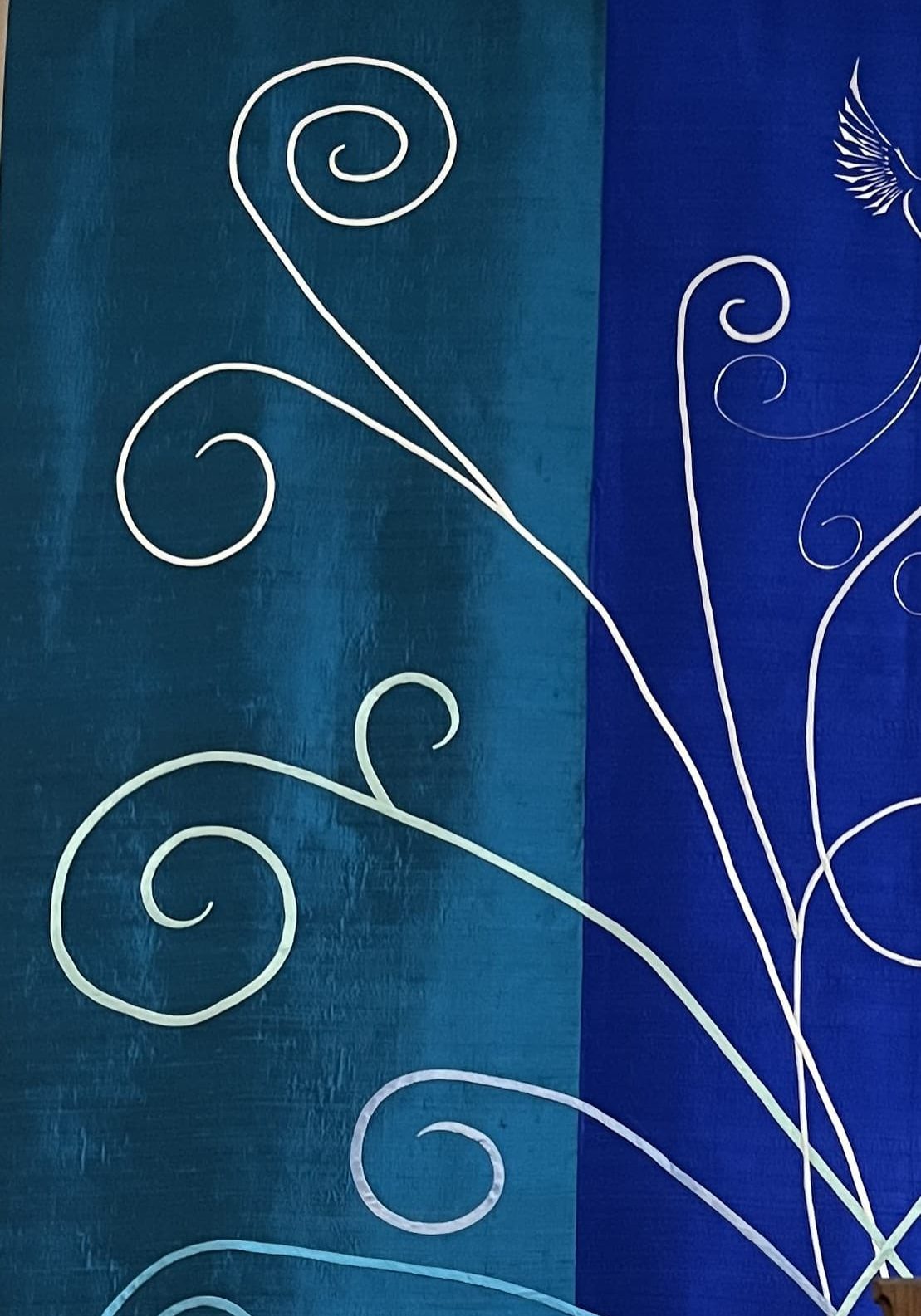
I specialize in bias appliqué to create my trademark “fiddlehead” designs.
For flowers and other botanical elements, I use raw-edge appliqué with thread painting
I also use hand embroidery techniques such as couching and goldwork to provide fine detail and drama.
From Concept to Completion
Each project is unique, and timelines vary depending on the scope and level of detail involved.
In some cases, overlays are incorporated to allow for variation across seasons without replacing the full set.

The process begins with an on-site visit to understand the space. I look at the light, the colors, the existing art and architecture, the existing appointments. I talk to the clergy and Altar Guild about the liturgical style and life of the church. and take detailed measurements.
Each piece is a one-of-a-kind creation, and I need to have a solid knowledge of the identity of the building and the community before I can design.
After the initial consultation, I develop a concept drawing and color study, along with an itemized proposal outlining each piece. This allows churches to move forward with a full set or select individual elements based on their needs.
Once the design is approved, each piece is created by hand in the studio, with careful attention to detail at every stage.
Types of Liturgical Paraments
Each set of altar paraments is composed of distinct elements that work together across the sanctuary. From the altar itself to the pulpit and lectern, and even to the Eucharistic elements, the design carries through as a unified visual language.
Frontal
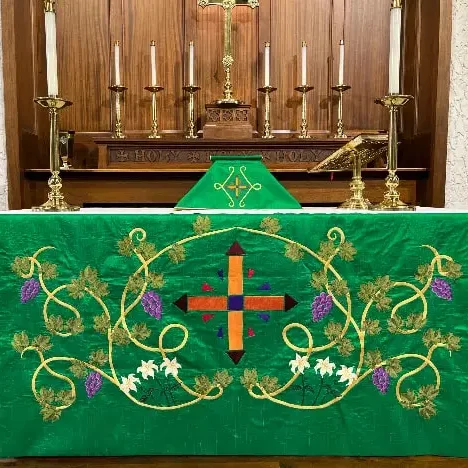
The frontal serves as the visual center of the altar, often setting the tone for the entire design. I typically begin here, developing a concept that can extend across the other pieces in the set.
Lectern Fall
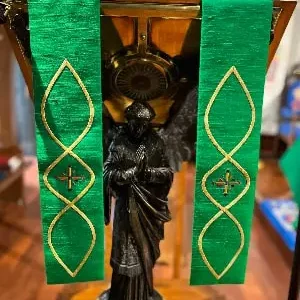
Lectern falls extend the visual language to another focal point within the sanctuary. These pieces help unify the space, ensuring that the design remains connected across movement, reading, and proclamation.
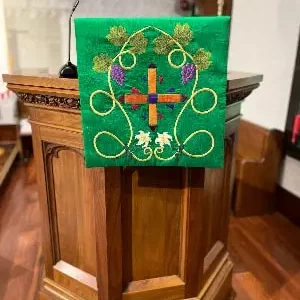
Pulpit Fall
Pulpit falls carry the design beyond the altar, creating continuity between the visual and spoken elements of the service. Though more restrained in scale, they echo key forms and motifs to maintain cohesion throughout the space.
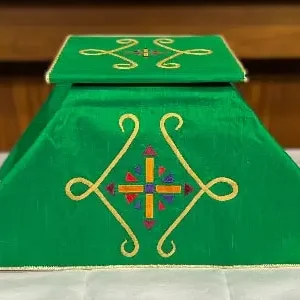
Burse & Veil
The burse and veil are designed in relationship to the altar, carrying the same materials, colors, and motifs into the Eucharistic elements. Though smaller in scale, they complete the set, reinforcing a sense of continuity and care in every detail.
Easier Altar Changes
Changing the altar can be such a laborious process, but I knew there had to be a better way. I created the Schaeffer System to dramatically reduce the amount of effort and energy necessary for changing the frontal - without removing anything on the altar!